


At Radiant Group Homes, we've dedicated our partnership to demystifying the Phoenix real estate landscape for families like yours. Today, we're diving deep into the Cromford Demand Index trends—a key indicator that reveals buyer momentum in our market. Drawing from the latest Cromford Report data as of October 2025 and insights from Mortgage News Daily, we'll analyze these trends, build compelling cases for acting in November or December versus waiting for spring, and pinpoint who stands to gain most by holding off. As always, we'll weave in why fall through spring remains the favorite season for most Phoenix residents, with its mild weather inviting endless outdoor escapades across Arizona's stunning terrain.
Unpacking the Cromford Demand Index: Historical and Current Trends
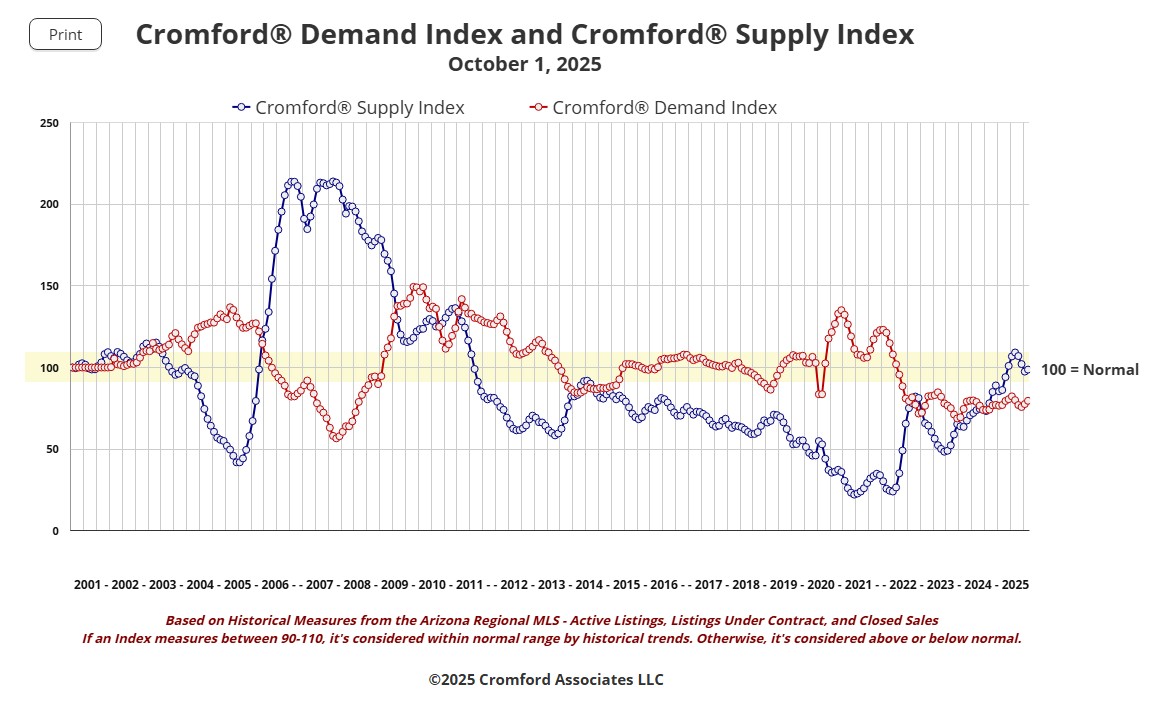
The Cromford Demand Index, represented by the red line in the Supply and Demand Index chart, measures buyer activity relative to historical norms in the Arizona Regional MLS, where 100 is normal, and 90-110 is balanced. Over the past two decades, this index has painted a picture of dramatic cycles driven by economic shifts, pandemics, and seasonal patterns.
From 2001 to 2003, demand hovered around normal levels (near 100), reflecting a stable market. Then came the mid-2000s boom: demand surged to peaks over 200 by 2005-2006, fueled by easy credit and speculation. The 2007-2008 crash sent it plummeting below 50, where it languished through 2011 amid foreclosures and economic woes. Recovery kicked in sharply in 2012, pushing demand back above 150 and sustaining high levels (often 150-200) through 2019 as the economy rebounded.
The 2020-2021 COVID era supercharged demand to record highs near 250, with remote work and low rates drawing buyers en masse. But 2022 brought a stark reversal—demand cratered below 50 as interest rates rose and inflation bit. In 2023, it briefly rebounded toward 100 before dipping again. Fast-forward to 2024-2025: demand has fluctuated in the 50-80 range, well below normal, indicating a cooler market with subdued buyer interest. As of October 2025, it's showing a slight uptick but remains under 100, suggesting ongoing caution among buyers.
Seasonally, the index reveals consistent patterns: demand often softens in late fall and winter (November-December dips) due to holidays and weather elsewhere drawing focus, then ramps up in spring (March-May peaks) with tax refunds, school planning, and relocations. Cross-referencing with the Listings Under Contract chart (weekly data from 2005-2025), we see contracts peaking in spring across years, aligning with higher demand. The Active Listings chart shows inventory building slightly toward year-end, while Months of Supply (around 2-4 months recently) tightens in spring, underscoring seasonal demand surges.
Complementing this, Mortgage News Daily's August 2025 data shows U.S. median home prices at $427,800 (up 1.91% YoY but down 0.97% MoM), and West region at $636,600 (up 0.55% YoY, up 0.14% MoM). In Phoenix, this translates to modest growth amid low demand, with potential for spring acceleration.
These trends signal opportunity—whether you're buying or selling, timing matters.
Why Jump In Now: Capitalizing on Low Demand for Quick Wins
If the current sub-normal Demand Index (around 80 in October 2025) tells us anything, it's that November and December offer a buyer's playground with less frenzy. With demand softer, as evidenced by the red line's recent lows and fewer listings under contract (dipping toward year-end in the chart), sellers face motivated buyers ready to close fast—perhaps for tax benefits or holiday moves. But buyers? You gain leverage: more negotiating power on prices, concessions, or inspections in a market where inventory hovers steady (Active Listings chart shows ~15,000-20,000 for 2025).
We see this as ideal for those needing speed—close before the new year and settle in just as Phoenix's fall weather hits its stride, with temps in the 70s perfect for teeing off at TPC Scottsdale or wandering the Desert Botanical Garden's luminous trails.

Acting now benefits buyers most in this low-demand phase, potentially locking in deals before any spring upswing.
The Power of Patience: Riding the Spring Demand Wave
Conversely, historical trends scream "wait for spring" if you can. The Demand Index consistently climbs post-winter, often surpassing 100 as buyers flood back—think the red line's upward wiggles in early-year data across cycles. By March-May, listings under contract spike (as seen in multi-year overlays), supply tightens (Months of Supply dropping below 3), and competition heats up, driving prices higher. Mortgage News Daily's modest YoY gains hint at building momentum; in Phoenix, this could mean 5-10% appreciation in peak months, per past patterns.
For sellers, this surge means more offers and top-dollar bids. Buyers get expanded choices as inventory grows slightly pre-spring (Active Listings trending up from January). Waiting lets you align with the market's natural rhythm, maximizing returns.
Plus, it gives you more time to savor why fall to spring is Arizona's sweet spot—crisp mornings for hiking Camelback Mountain, clear skies over Sonoran Preserve trails, and that unbeatable desert vibe without summer's scorch.

In our view, spring amplifies outcomes for patient players.
Who Gains More from Waiting? Sellers Take the Crown, But Buyers Beware
Crunching the trends, we conclude sellers benefit more by waiting until spring. The Demand Index's historical spring boosts (often 20-50% higher than winter lows) create bidding fervor, faster sales, and premium prices—especially in a 2025 market recovering from sub-normal levels. If profit is your goal, hold for that red-line ascent.
Buyers, however, might regret delays: rising demand could inflate costs, though more options emerge. If value hunting is key, November-December's softer index favors you now. Phoenix's market stays seller-leaning overall (supply blue line often below demand), but current lows offer balance.
Why deliberate at all? Because fall to spring transforms Phoenix into paradise—stargazing under vast skies, festivals like the Arizona Renaissance Faire, or simply biking canals in perfect weather.

At Radiant Group Homes, we're your trusted partners. Whether analyzing indices or timing your move, visit www.radiantgrouphomes.com or reach out for tailored advice. Let's turn these trends into your success story!